

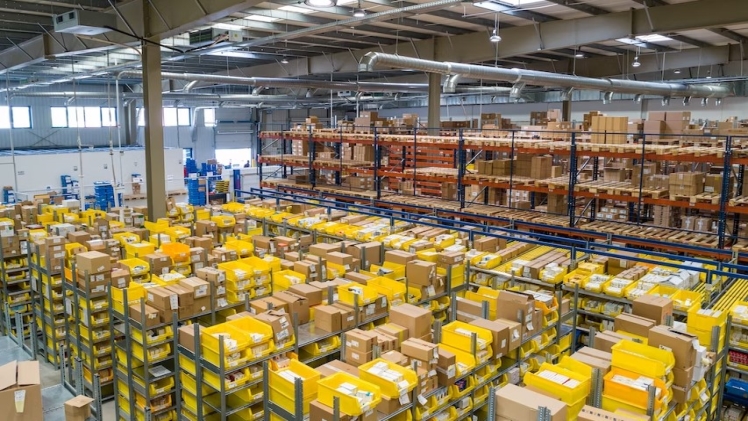
The growth of e-commerce has brought about a significant transformation in how businesses approach their warehousing operations. To support the fulfillment centers that serve as the foundation of e-commerce fulfillment, warehouses must evolve and adapt.
As highlighted in a November 2022 article in Supply Chain Quarterly, there is a growing trend toward businesses outsourcing their logistics operations. This presents new opportunities for warehousing providers to offer additional services, such as supply chain planning, to support their customers.
By offering a broader range of services, warehousing providers can strengthen their partnerships with customers and enhance their value proposition in an increasingly competitive market. In this article, we will explore the crucial role that warehousing plays in the evolution of fulfillment.
From Brick-and-Mortar to Click-and-Mortar
As online shopping continues to grow, businesses are adapting to the changing retail landscape by integrating digital channels into their existing brick-and-mortar operations. This has led to the rise of warehousing operations for click-and-mortar fulfillment centers, which act as the foundation of e-commerce fulfillment.
These warehouses are designed to efficiently store, organize and move inventory quickly and accurately in order to support the click-and-mortar fulfillment centers.
US-based Red Stag Fulfillment has pointed out that the integration of digital channels has led to a significant increase in the number of SKUs (stock-keeping units) that businesses need to manage. This presents a challenge for warehouses that must handle a higher volume of smaller items rather than traditional pallets and large containers.
To support the unique demands of click-and-mortar fulfillment, warehouses must be designed with e-commerce in mind. This includes the use of advanced technologies, such as automated picking and packing systems, to increase efficiency and reduce errors.
The Importance of Inventory Management
In the click-and-mortar fulfillment ecosystem, inventory management is crucial for successful warehousing operations. As noted in a Business News Daily article, effective inventory management is crucial for a variety of businesses, including retail companies, manufacturing businesses, and shipping and logistics operations.
With multiple sales channels and fulfillment options, it is challenging to ensure that inventory is allocated and managed effectively, leading to stockouts or overstocks.
Therefore, warehouses need to have robust inventory management systems which provide real-time visibility of inventory levels across all channels. This enables businesses to optimize their inventory levels and ensure that they have the right products in stock to meet customer demand.
The Need for Speed and Agility
In today’s fast-paced economy, speed and agility have become crucial factors for businesses to succeed. With the growing trend of e-commerce, warehousing operations are under constant pressure to keep up with the increasing demand for faster and more efficient deliveries.
Traditional warehousing models that relied on bulk shipments to retail stores are no longer sufficient to meet the needs of customers who expect to receive their orders quickly and accurately.
To address this challenge, businesses are turning to transportation technologies that can help them streamline their operations and improve their delivery times. Automated sorting and packing systems are just one example of the many innovative solutions that are available today.
These systems use advanced technologies such as computer vision, artificial intelligence, and robotics to sort and pack goods quickly and accurately, reducing the time it takes to process orders and increasing the speed of delivery.
The Challenges
While warehousing operations for fulfillment centers offer many benefits, they also come with their own set of challenges. One of the main challenges is balancing the cost of warehousing with the benefits of providing a seamless shopping experience.
Warehouses require significant capital investment, not only in terms of building and maintaining the facility but also in terms of technology and staffing. Therefore, businesses need to balance the cost of warehousing with the benefits of providing a seamless shopping experience for their customers.
A recent report by The Loadstar indicates that the current economic climate is putting a strain on warehouse development. Despite the crucial role of warehousing in providing a seamless shopping experience for customers, the slowing of volumes and rising capital costs are taking their toll. The report predicts that warehouse development in the US will hit a seven-year low in 2023.
Conclusion
In summary, the rapid growth of e-commerce has had a significant impact on the role of warehouses in the fulfillment process. Warehouses must now go beyond traditional storage functions and adapt to the unique requirements of click-and-mortar fulfillment, such as effective inventory management and the ability to handle individual orders with speed and agility.
Despite the challenges posed by the increasing complexity of logistics operations, there is an opportunity for warehousing providers to offer additional services and strengthen their partnerships with customers. However, as economic challenges persist, it is crucial for warehousing providers to continue to evolve and innovate to meet the changing demands of e-commerce fulfillment.
