

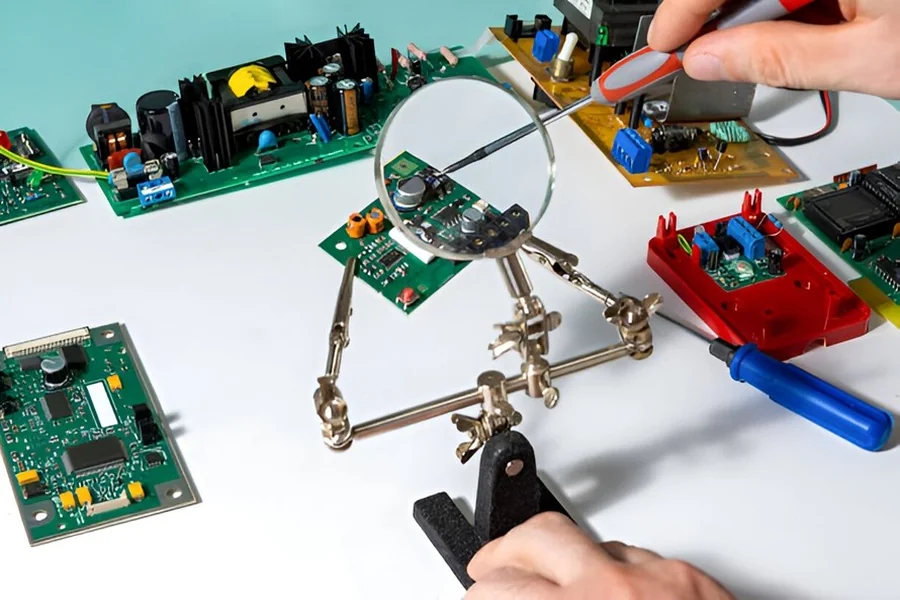
Double sided PCB assembly is one of the most widely used manufacturing methods in today’s electronics industry because it allows components to be mounted on both sides of a printed circuit board. This design increases functionality without significantly increasing board size, making it ideal for compact devices, modern gadgets, and high-performance industrial products. Through efficient electrical routing and the ability to add more components in limited space, double sided PCB assembly provides manufacturers with a flexible and affordable way to elevate circuit performance while maintaining mechanical stability. Its balanced structure allows for smoother current flow, optimized thermal behavior, and enhanced circuit density, making it a preferred choice for both consumer electronics and advanced applications.
Why Double Sided PCB Assembly Matters
Double sided PCB assembly matters because it bridges the gap between simple single-layer boards and more complex multilayer PCBs. It offers more design freedom, supports higher component counts, and allows engineers to build more powerful devices without adding unnecessary layers or cost. This type of assembly is essential when functionality must be increased without expanding the product’s physical dimensions. By utilizing both sides of the board, circuit designers can reduce track length, minimize interference, and enhance signal reliability. The result is a more compact, efficient, and cost-effective solution that supports a wide range of electronic products, from power supplies and LED lighting to automotive modules and communication devices.
How Double Sided PCB Assembly Works
The process of double sided PCB assembly begins with preparing the bare board, which already has copper traces on both sides. Solder paste is carefully applied to each side, followed by precise placement of surface-mount components. Manufacturers often use high-accuracy pick-and-place machines to ensure each component is positioned correctly. Reflow soldering is then performed, typically in two stages, to secure the components on each side without disturbing the previously soldered elements. Through-hole components, when required, are inserted and soldered during the wave soldering or selective soldering stage. This method ensures strong, durable solder joints that can withstand both mechanical and thermal stress. The dual-side placement requires careful thermal profiling to avoid overheating and to ensure optimal bonding on both layers of the board.
Design Considerations for Double Sided PCB Assembly
Engineers designing for double sided PCB assembly must consider signal integrity, heat distribution, and efficient component placement. Strategic planning is essential because one side of the board may contain high-density SMT components while the opposite side may be assigned to heat-generating or power-related circuits. Designers often work to balance the component load on both sides to avoid warping during reflow. Proper spacing, trace routing, and via placement are also crucial to maintain electrical performance and simplify the assembly process. Thermal reliefs, ground planes, and controlled impedance regions help ensure that the circuit performs reliably even under harsh conditions. Thoughtful design not only guarantees manufacturability but also reduces production costs and assembly time.
Applications of Double Sided PCB Assembly
Double sided PCB assembly plays a vital role across multiple industries because of its ability to support complex circuits in compact spaces. In consumer electronics, it is used in smartphones, chargers, television circuits, and audio modules. Automotive manufacturers depend on double sided boards for engine control units, lighting systems, and dashboard electronics. Industrial equipment such as motor controllers, automation devices, and power converters rely on this assembly type for durability and high current handling. The LED lighting industry benefits especially from double sided PCB assembly because it enables better thermal performance and more efficient heat dissipation. Telecommunications, medical devices, and renewable energy systems also frequently utilize this technology, making it a highly versatile solution in modern electronics.
Advantages of Double Sided PCB Assembly
One of the largest advantages of double sided PCB assembly is its ability to increase circuit density without requiring more layers. This allows designers to build more powerful products while keeping manufacturing costs affordable. The use of both sides supports more complex routing, reduces electrical noise, and leads to more stable performance. The structure provides improved design flexibility, enabling engineers to organize components based on function, heat output, or placement requirements. Manufacturers also appreciate the ability to prototype faster because double sided boards strike a perfect balance between simplicity and performance. They deliver better value compared to single-layer boards while avoiding the cost and complexity of multilayer PCBs.
Quality Control in Double Sided PCB Assembly
Maintaining high quality during double sided PCB assembly is crucial because even small alignment or soldering issues can affect performance. Modern manufacturers rely on automated inspection systems to verify component placement and solder joints on both sides of the board. Automated optical inspection, X-ray inspection, and functional testing ensure that all connections are secure and that no hidden defects exist. Careful inspection of vias, solder bridges, polarity, and thermal behavior helps prevent failures during operation. By combining automated checks with expert engineering review, manufacturers ensure that every completed board meets industry standards and performs reliably in real-world applications.
Choosing a Partner for High-Quality Production
If you want your product to benefit from the performance, reliability, and compact design offered by double sided PCB assembly, it is important to work with a partner that understands engineering precision and efficient production. A trusted manufacturer can guide you through design optimization, component sourcing, and assembly quality to ensure the best results. To achieve the highest reliability for your electronics project, the right partner should provide the best PCB assembly service to support your production goals.
