

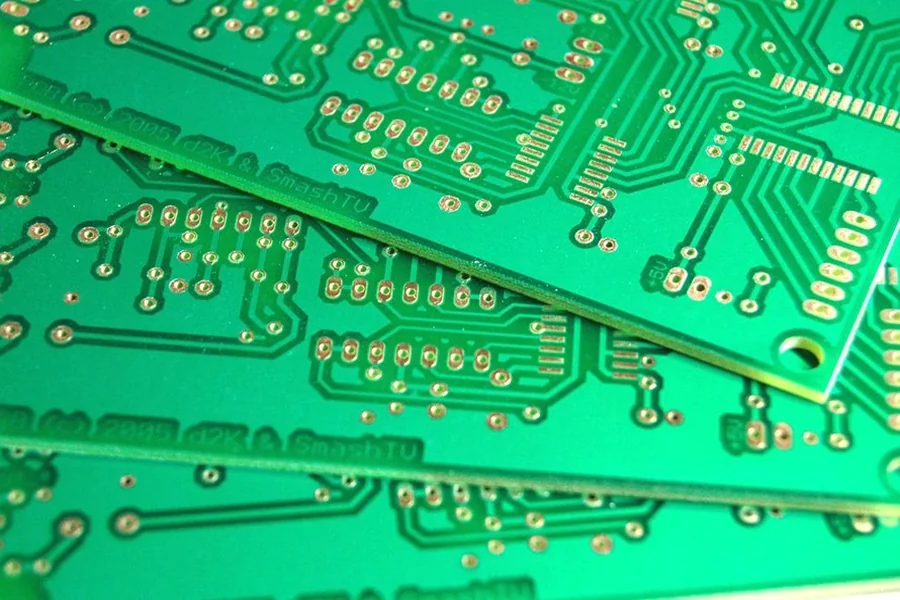
As electronic devices become increasingly complex, the need for compact, high-performance circuit boards has grown. 4 Layer PCB technology addresses these demands by providing four conductive layers in a single board, allowing for high-density circuit layouts, enhanced signal integrity, and improved thermal management. These boards are widely used in telecommunications, industrial electronics, medical devices, and computing applications.
What Is a 4 Layer PCB?
A 4 Layer PCB consists of four copper layers separated by insulating materials, usually arranged as two signal layers and two power or ground planes. This multilayer design allows for complex routing and efficient power distribution while minimizing interference and signal loss. Components can be mounted on the top and bottom surfaces, and the internal layers handle critical power or grounding requirements.
The design of a 4-layer PCB enables engineers to maintain a compact board size without sacrificing circuit performance. Controlled impedance, reduced crosstalk, and better electromagnetic compatibility are some of the benefits of this multilayer configuration.
Advantages of 4 Layer PCB
One of the key advantages of a 4 Layer PCB is its ability to handle complex and high-density circuits. With multiple layers, designers can route more signals without overcrowding the board, making it ideal for sophisticated electronic systems.
Signal integrity is another important benefit. The inner power and ground planes provide consistent voltage levels and reduce noise, ensuring reliable operation of high-speed and high-frequency components. This feature is particularly crucial for computing devices, communication modules, and precision electronics.
Thermal management is also improved in 4-layer PCBs. The internal planes help dissipate heat generated by high-power components, preventing hot spots and prolonging the life of both the PCB and the mounted devices.
Applications of 4 Layer PCB
4 Layer PCB technology is used extensively across industries that require compact and high-performance boards. In telecommunications, these PCBs support routers, switches, and signal processing units where dense circuits and reliable signal transmission are critical.
Medical electronics benefit from 4-layer boards in imaging devices, monitoring systems, and diagnostic equipment, providing consistent performance and compact design. In industrial applications, 4-layer PCBs are used in automation controllers, power management systems, and instrumentation, enabling precise control and high reliability.
Computing and consumer electronics, including laptops, smartphones, and gaming devices, also rely on 4-layer PCBs to accommodate high component density while ensuring stable operation and minimal electromagnetic interference.
Manufacturing Considerations
Fabricating a 4 Layer PCB requires precision and advanced manufacturing techniques. The copper layers are laminated with insulating material, drilled for vias, and plated to create electrical connections between layers. Components are mounted using through-hole or surface-mount technology depending on design requirements.
Surface finishes such as ENIG, HASL, or immersion silver are applied to protect the copper and ensure reliable soldering. Rigorous quality control, including electrical testing, thermal evaluation, and inspection for defects, guarantees that the boards meet the required performance and reliability standards.
Choosing a Trusted Supplier
Partnering with a reliable 4 Layer PCB supplier ensures access to high-quality, durable, and high-performance boards. A trusted supplier offers precise fabrication, strict quality control, and customization options to meet specific design requirements. By working with a reputable 4 Layer PCB supplier, businesses can achieve efficient, reliable, and long-lasting solutions for complex electronic applications.
