

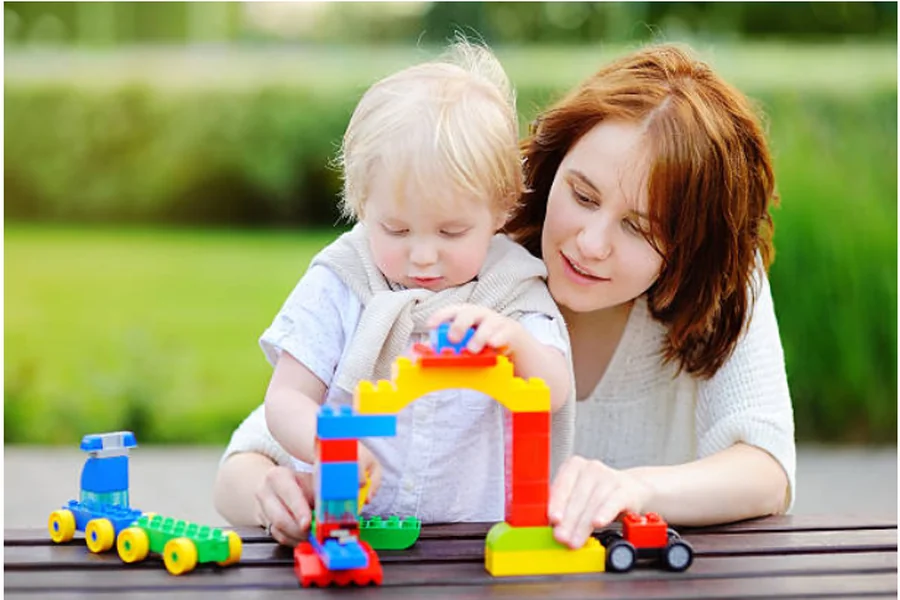
Have you ever thought, “Do toys help my child learn something useful?”
This is a very common question that comes to every parent’s mind. Especially when we see so many toys in the market, it becomes confusing which ones are just for timepass and which help our child grow smarter.
Today, let’s talk about how educational toys are not just for fun, but they also support brain development in small kids.
Why Early Childhood Is Important for Brain Growth
From birth till around age 6, a child’s brain grows very fast. During this time, their brain is learning how to think, speak, remember, move, and even feel things like happiness or excitement.
Whatever we give them in this age, including toys, makes a big impact. The mind of a child is like soft clay at this time. If we give them the right kind of activities, they pick up new ideas faster and build a strong base for future learning.
What Are Educational Toys?
The educational toys are those toys that help kids learn useful skills while playing. They are made to support learning like counting, shapes, problem solving, hand movement, and even social skills.
These toys are simple, colourful, and fun, but they also help the child’s brain to think, explore, and grow happily.
Some examples are:
- Shape sorters
- Alphabet blocks
- Puzzle boards
- Musical toys
- Activity cubes
- Flashcards
- Number-matching toys
How Toys Help Brain Development
Every parent wants their child to grow smart and happy, and toys, if chosen right, can help in that growth while keeping the child smiling.
1. Improves Thinking Skills
When a child plays with puzzles or building blocks, they learn how to think about shapes, sizes, and balance. They start making small decisions like which piece fits where. All this improves their thinking ability. Even simple toys like stacking rings help in understanding size order and balance.
2. Builds Memory and Focus
Games like memory cards or matching pairs help the child use their memory power. They learn how to remember and recall things. It also teaches them to sit in one place and focus, which is very useful when they start going to school.
3. Supports Language Growth
Toys with alphabets, pictures, or sound buttons help kids learn new words and meanings. Parents can sit with them and say the names of animals, fruits, or numbers. Slowly, the child also starts repeating those words and connects the sound to the object. This is very helpful for talking and understanding language better.
4. Improves Hand and Eye Movement
Educational toys like bead mazes, lacing boards, or simple hammering toys help in improving hand and eye coordination. These toys train their small muscles to become stronger and more flexible. Later, this helps them with writing, drawing, and other schoolwork.
5. Teaches Patience and Solving Problems
When a toy doesn’t work in one go, children try again. This teaches them not to give up quickly. They learn how to fix problems calmly. This builds confidence and patience. Toys that need steps, like connecting pieces or finishing a puzzle, make kids understand that good things take some time.
6. Helps in Social and Emotional Growth
When children play together with toys like pretend cooking sets or doctor kits, they learn to share, take turns, and express feelings. Even solo play teaches self-control and emotional comfort. If a toy plays a happy song when pressed, the child smiles and feels proud. This type of joy helps in healthy emotional growth.
Choosing the Right Toys by Age
It’s important to give toys according to the child’s age so they can enjoy and also learn.
For babies (0–1 year)
Soft toys, rattles, black-and-white picture books, and toys with gentle music work well. These help in sound, touch, and light response.
For toddlers (1–3 years)
Push-pull toys, shape sorters, stacking cups, and textured books are helpful. These support movement, touch, and basic thinking.
For preschoolers (3–5 years)
Alphabet toys, puzzles, play kitchen sets, colour and number games, and storybooks help this age group. These toys support memory, language, and problem solving.
For ages 5–6 years
Board games, building kits, flashcards, and simple science toys can help prepare them for school. These toys improve thinking, logic, and teamwork.
How Parents Can Make Playtime Better
Toys help a lot, but the way parents play along makes a big difference. If a parent sits with the child and talks during play, it builds a stronger bond. Also, the child learns language and emotion better. Just 20–30 minutes a day of happy, relaxed play with your child can support healthy growth.
Keep praising their efforts, not just results. If they complete a small puzzle, say, “Wow, you did it nicely!” It builds confidence and happiness. Let them explore toys in their own way, too, instead of always showing the “correct” way.
Conclusion
Educational toys are not just for timepass they are like smart tools that help your child think better, speak clearly, and become more confident. In early childhood, when the brain is learning fast, these toys become helpful friends. By choosing the right toys and playing with love, parents can support brain development simply and happily.
